



Latest News
President: Energy as the Core of Carbon Reduction; Continue Optimizing the Power Grid and Promoting Energy Storage Technologies
Release Date : 2025-01-23
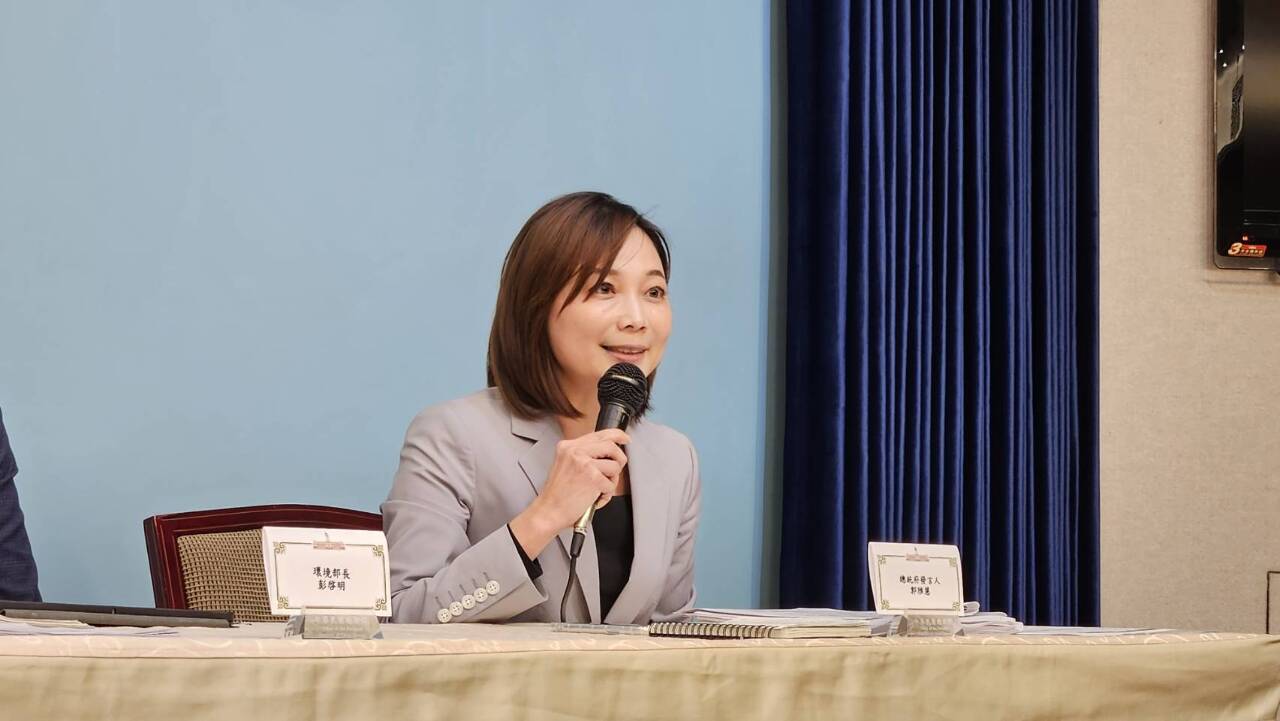
Presidential Office Spokesperson Kolas Yotaka conveyed President Lai Ching-te's directives during the National Climate Change Countermeasures Committee meeting held at the Presidential Office. (Photo by Ou-yang Meng-ping)
President Lai Ching-te presided over the third meeting of the National Climate Change Countermeasures Committee today (23rd) at the Presidential Office. After hearing briefings from six government ministries, President Lai stated that energy is the core of carbon reduction. He emphasized the need to accelerate the development of renewable energy, reform green energy development procedures, and simultaneously optimize power grid infrastructure while promoting the widespread adoption of energy storage technologies to ensure a stable and efficient energy supply.
During the meeting, President Lai announced Taiwan’s new national carbon reduction targets: a reduction of 32±2% by 2032 and 38±2% by 2035 compared to 2005 levels.
After listening to carbon reduction action plans presented by six ministries, including the National Development Council, the Ministry of Environment, the Ministry of Economic Affairs, the Ministry of the Interior, the Ministry of Transportation and Communications, and the Ministry of Agriculture, the President issued directives.
In response to the new 2032 and 2035 carbon reduction goals, President Lai instructed the strengthening of public communication mechanisms. He emphasized the importance of gathering diverse opinions and, after approval by the Executive Yuan, proposing Taiwan’s “NDC 3.0” to align with international standards. He also requested administrative departments to incorporate feedback from committee members to enhance the plans, ensuring all efforts align to achieve the set targets on time and with quality. Additionally, the administration was directed to strengthen performance management mechanisms, set key milestones, and report execution results to the committee every six months for policy review and improvement.
The President reiterated that “energy is the core of carbon reduction” He emphasized the need to accelerate the development of renewable energy and reform green energy development procedures. Presidential Office Spokesperson Kolas Yotaka conveyed:
“(Original audio) We must continue to optimize the foundational infrastructure of the power grid and promote the widespread adoption of energy storage technologies to ensure a stable and efficient energy supply. Furthermore, we need to introduce green manufacturing processes and low-carbon technologies across various industries and state-owned enterprises, supporting more SMEs in participating in the green supply chain.”
In the manufacturing sector, President Lai called for large enterprises to lead low-carbon transformations, creating a ripple effect that benefits smaller businesses. He also emphasized the dual-axis transformation of industries towards digitalization and net-zero practices. For residential and commercial buildings, he urged the acceleration of energy efficiency standards to drive the growth of smart building materials and energy-saving equipment industries.
In transportation, the President stressed the need to continue accelerating the electrification and decarbonization of vehicles. For agriculture, he called for the development of low-carbon sustainable agriculture, the enhancement of agricultural ecosystem resilience, and a focus on just transitions. He also highlighted the importance of advancing resource recycling technologies and increasing public awareness and participation.
In conclusion, President Lai noted that the new carbon reduction targets are only a starting point. He emphasized the need for the administrative team to strengthen public communication, further build consensus, and seek solutions to potential challenges. Strategies must be continuously refined, with the ultimate goal being implementation. This ensures that the carbon reduction targets for 2030, 2032, and 2035 can be achieved as planned.
Source: https://www.rti.org.tw/news/view/id/2236076
Written by: RADIO TAIWAN INTL
Date: 2025.1.23
|Facebook:SUNPOWER SMART ENERGY CO.,LTD
|Instagram:spe_tech
|Line@:@497rtazj
|Tel:03-3550137